

Author

When we think about fitness, we often focus on weight, steps, or calories burned. But one of the most powerful indicators of long-term health and performance is something many people have never heard of: VO₂ max.
VO₂ max isn’t just a number for elite athletes. It’s actually one of the best predictors of longevity, metabolic health, and cardiovascular fitness.
Modern metabolic testing can go far beyond a single VO₂ max score, providing insight into how your heart, lungs and muscles work together to produce energy.
What Is VO₂ Max?
VO₂ max represents the maximum amount of oxygen your body can use during exercise.
Oxygen is essential for producing energy in your cells. The more efficiently your body can deliver and use oxygen, the better your aerobic fitness and endurance.
During exercise, oxygen travels through what’s called the oxygen transport chain. If any part of this chain isn’t functioning optimally, performance and health can suffer.
That’s why VO₂ max is often considered the gold standard measurement of fitness.
Why VO₂ Max Matters for Health and Longevity
Research consistently shows that higher aerobic capacity is strongly linked with lower risk of chronic disease and longer lifespan.
Improving aerobic capacity can lead to:
- Increased mitochondrial density (the energy factories of your cells)
- Better fat metabolism and metabolic flexibility
- Improved insulin sensitivity
- Reduced arterial stiffness and better blood flow
- Increased nitric oxide production, improving circulation
- Enhanced heart rate variability and recovery
- Reduced risk of cardiovascular disease and metabolic disorders
Interestingly, aerobic capacity tends to decline naturally after about age 35–40, which is why establishing a baseline and monitoring it over time can be incredibly valuable for long-term health.
But My Watch Already Tells Me My VO₂ Max…
Many fitness watches and apps estimate VO₂ max using data like heart rate, speed, pace or power output. These estimates can be useful for tracking general trends in fitness, but they are still calculations based on algorithms, not direct measurements.
A laboratory or metabolic VO₂ max test is different because it measures the gases you breathe in and out in real time. By analysing oxygen consumption and carbon dioxide production breath-by-breath, the results are far more accurate and provide a much deeper insight into how your body performs during exercise.
Importantly, a metabolic test doesn’t just give you a VO₂ max score. It can also reveal:
- Your true training zones
- How efficiently you burn fat vs carbohydrates
- Your ventilatory thresholds (when exercise starts to become harder)
- Breathing efficiency and respiratory patterns
- Cardiovascular efficiency, such as oxygen used per heartbeat
- Recovery capacity after exercise
So while wearable devices can offer a useful estimate, a full metabolic test provides a much more detailed picture of your fitness, metabolism and performance, allowing training to be far more personalised and effective.
What Happens During a VO₂ Max Test?
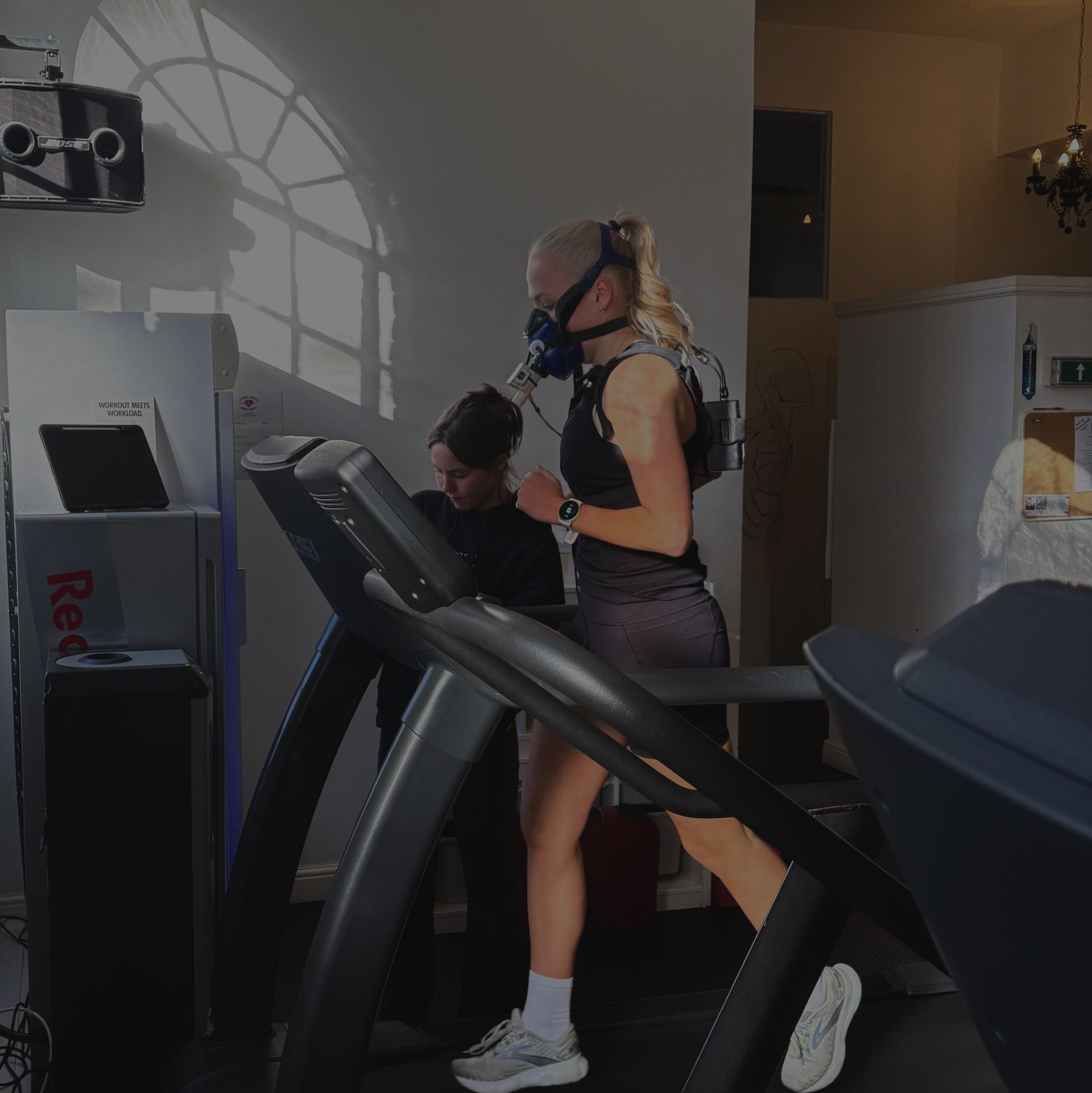
During the test, you wear a lightweight mask that analyses the gases in your breath. This allows the system to measure oxygen consumption, carbon dioxide production, breathing patterns and how your body uses fat and carbohydrates for energy.
You’ll then perform a short, gradually increasing exercise test that typically lasts around 10–12 minutes. The intensity increases steadily until you reach your maximum effort, allowing us to assess how your cardiovascular, respiratory and metabolic systems respond to exercise.
The test can be done on either a treadmill or a stationary bike, depending on what you’re most comfortable with or the sport you usually train for.
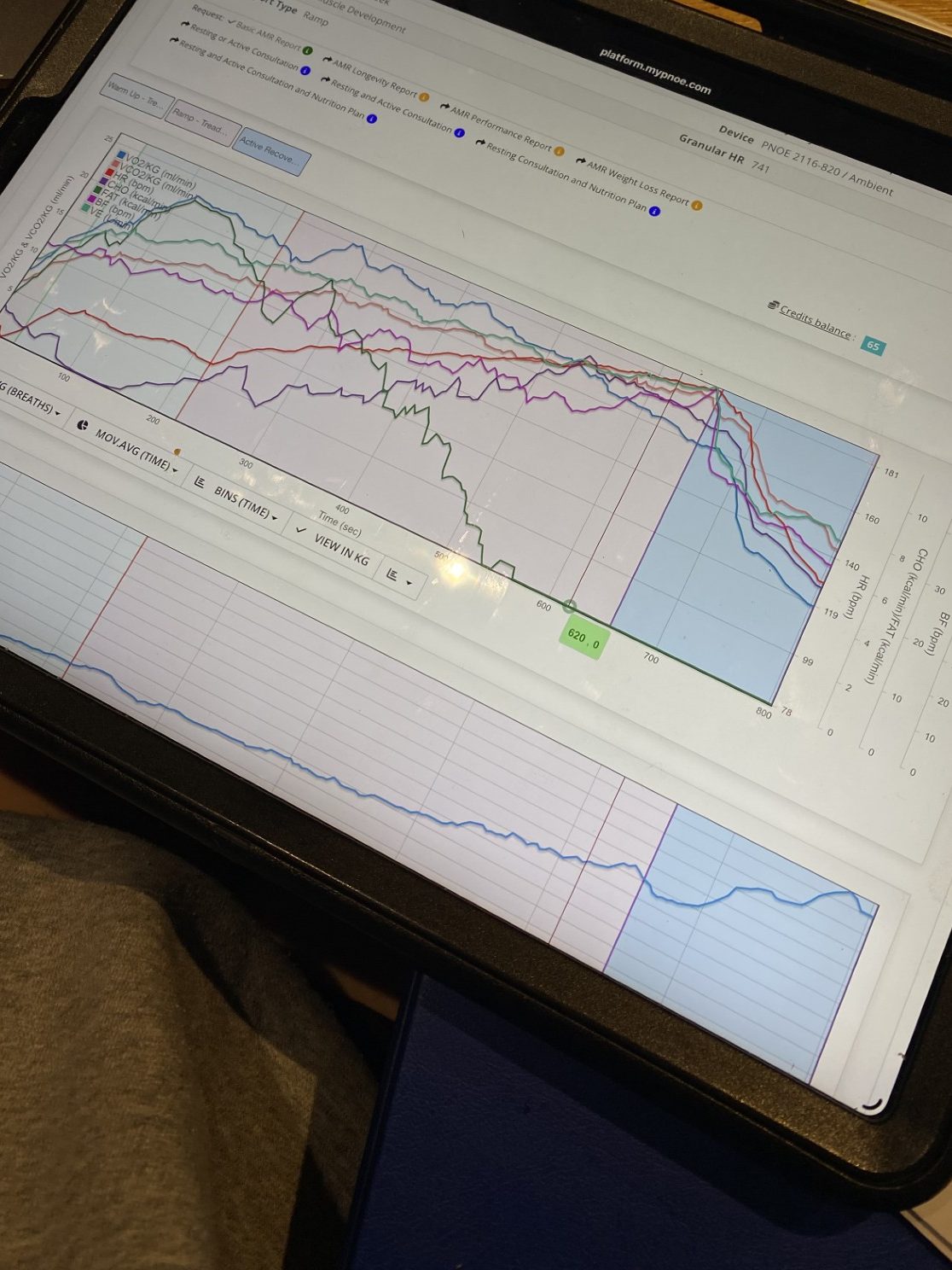
After the test, the data is analysed to provide insights into your VO₂ max, training zones, fuel utilisation and overall metabolic efficiency, helping guide personalised training and health strategies.
Understanding Energy Use: Fat vs Carbohydrates
One of the most interesting insights from metabolic testing is how your body fuels exercise.
Your body primarily uses two fuel sources:
- Fat
- Carbohydrates
A metabolically healthy individual can efficiently switch between these fuels, a concept known as metabolic flexibility.
However, many people struggle with this.
You might appear lean and fit but still have poor fat-burning efficiency, which can be an early indicator of metabolic dysfunction and increased risk of conditions like type 2 diabetes.
Metabolic testing identifies:
- Your fat-burning capacity
- The heart rate where fuel shifts from fat to carbohydrates
- How efficiently your muscles use oxygen to produce energy
This fuel shift is also what helps determine your personalised training zones.
Training Zones
Another key benefit of metabolic testing is identifying personalised training zones.
One zone in particular gets a lot of attention: Zone 2 training.
Zone 2 exercise is performed at a steady, moderate intensity where the body primarily burns fat.
Training in this zone helps:
- Increase mitochondrial density
- Improve capillarisation (more blood vessels delivering oxygen to muscles)
- Enhance fat metabolism
- Reduce inflammation
- Improve endurance capacity
At the cellular level, it activates pathways such as AMPK and PGC-1α, which stimulate the production of new mitochondria and improve energy efficiency.
These adaptations are crucial for both performance and long-term metabolic health.
Why Personalisation Matters
Factors influencing metabolic performance include:
- Genetics
- Muscle fibre type
- Nutrition
- Hormonal health
- Training history
- Lifestyle and stress levels
Two people with the same VO₂ max could have very different metabolic efficiency or fuel usage patterns.
That’s why personalised testing can be so valuable. Instead of guessing, training can be designed to target specific limitations in the oxygen chain.
Key Takeaways
VO₂ max is one of the most powerful indicators of cardiovascular fitness, metabolic health and long-term longevity.
While wearable devices can estimate VO₂ max, a metabolic VO₂ test provides far deeper insight into how your body produces energy, including your true training zones, fuel utilisation and physiological limitations.
Understanding this data allows training and lifestyle strategies to be fully personalised, helping improve both performance and long-term health.
At Sound Mind and Body, I offer VO₂ max and metabolic testing to help you better understand your physiology and optimise your training, health and longevity.
Get in touch if you would like more information by email: Sophie-EC@soundmindandbody.co.uk or send me a DM on Instagram: soph_sportsnscran