Author

By Maia Stovold | Personal Trainer and Sport and Exercise Science Student | trainwithmaia.pt
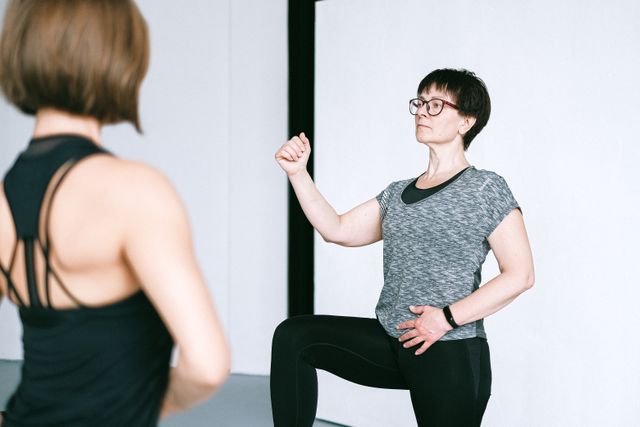
If you have ever been told that lifting weights is not for women, or that it will make you bulky, or that cardio is the only thing you need, this blog is for you. And if you are going through menopause and feeling like your body is changing in ways you cannot quite control, this is especially for you.
The evidence on strength training and menopause is some of the clearest in all of exercise science. Lifting weights, whether that is dumbbells, resistance bands, barbells, or machines, is not just beneficial for women in menopause. At this stage of life, it is arguably the single most important thing you can do for your long-term health.
This blog explains what is happening in your body during menopause, why those changes make strength training more important than ever, and exactly what lifting weights does to protect you as you age. It is written for women at any stage of the menopause journey, whether you are in perimenopause, going through it now, or in the postmenopausal years.
Menopause is not a reason to slow down. For many women, it is the most important time to start taking their physical strength seriously.
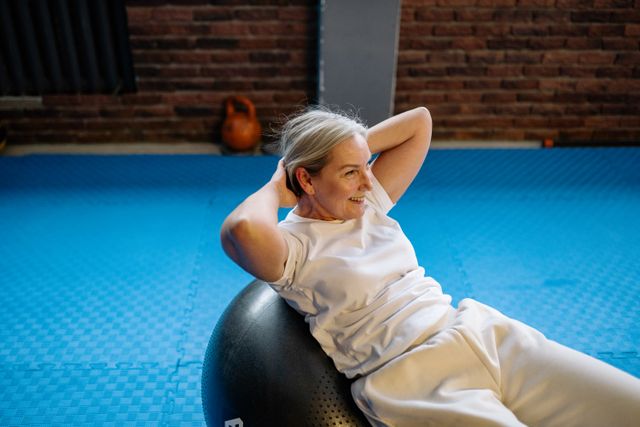
What Happens to Your Body During Menopause
Menopause is defined as the point at which a woman has not had a period for twelve consecutive months. But the physical changes that come with it begin years earlier, during perimenopause, as oestrogen levels start to decline.
Oestrogen is not just a reproductive hormone. It plays a role in bone density, muscle maintenance, fat distribution, cardiovascular health, mood, sleep, and metabolic rate. When oestrogen levels drop, all of these systems are affected simultaneously. Understanding what is happening makes it much easier to understand why the right exercise matters so much.
| 1 in 3 women over 50 will experience an osteoporosis-related fracture | 3-8% muscle mass lost per decade from age 30 without intervention | Up to 20% bone density can be lost in the first 5-7 years post-menopause | 2x increased cardiovascular risk after menopause compared to pre-menopause |
Bone Density Loss
Oestrogen plays a critical role in maintaining bone density. When it declines, bone resorption, the process by which the body breaks down old bone, begins to outpace bone formation. In the first five to seven years after menopause, women can lose up to 20% of their bone density. This is what leads to osteoporosis and the fracture risk that comes with it.
The most commonly fractured bones are the hip, wrist, and spine, all of which have enormous implications for independence and quality of life. A hip fracture in an older woman is not just painful. It is one of the leading predictors of loss of independence, admission to residential care, and in some cases, mortality within the following year.
Muscle Mass Loss
From around the age of 30, adults begin to lose muscle mass at a rate of roughly three to eight percent per decade, a process called sarcopenia. Oestrogen has a protective effect on muscle tissue, so when levels drop at menopause, this muscle loss accelerates. This is why many women notice that their body composition changes during menopause even if their diet and activity levels have not changed. Less muscle means a slower metabolism, less strength, and a higher proportion of body fat, particularly around the abdomen.
Weight and Metabolic Changes
The metabolic slowdown that comes with declining oestrogen and muscle loss means that the body burns fewer calories at rest. Many women find they gain weight during menopause despite eating and moving in the same way they always have. This is not a failure of willpower. It is a physiological change, and it responds to physiological solutions, principally, building and maintaining muscle mass through strength training.
Cardiovascular Health
Before menopause, oestrogen has a protective effect on the cardiovascular system, it helps keep blood vessels flexible and supports healthy cholesterol levels. After menopause, that protection diminishes and cardiovascular disease risk rises significantly. Exercise and strength training specifically is one of the most effective tools for managing this risk.
Mood, Sleep, and Brain Health
The hormonal fluctuations of menopause affect neurotransmitter systems, which is why mood changes, anxiety, brain fog, and sleep disturbances are so common. Exercise has well-documented effects on mood, cognitive function, and sleep quality and for menopausal women specifically, regular physical activity has been shown to reduce the severity of hot flushes, improve sleep, and support mental health.
Why Lifting Weights Specifically and Not Just Cardio
Cardio is valuable. Walking, swimming, cycling, running, all of these have genuine health benefits and should absolutely be part of an active lifestyle. But for menopausal women, cardio alone is not enough to address the specific changes that are happening in the body. This is the part that is still not widely understood, and it is the most important thing in this blog.
Cardio burns calories during the session. Strength training rebuilds the engine that burns them.
| What cardio does well Improves cardiovascular fitness and heart health. Burns calories during the sessionSupports mood and reduces stress. Improves sleep quality. Maintains a healthy weight alongside diet | What strength training adds Directly stimulates bone density maintenance and growth. Builds and preserves muscle mass the key to a healthy metabolism. Raises the resting metabolic rate (burns more at rest). Reduces fall risk through stronger muscles and better balance. Improves insulin sensitivity and blood sugar regulation. Supports joint health and reduces pain. Builds physical confidence and functional independence |
The critical difference is this: only mechanical loading, the stress placed on bones and muscles by resistance training, stimulates the bone remodelling process that maintains and builds bone density. Cardio, however beneficial, does not do this in the same way. For a menopausal woman at risk of osteoporosis, this distinction is not a minor detail. It is the whole point.
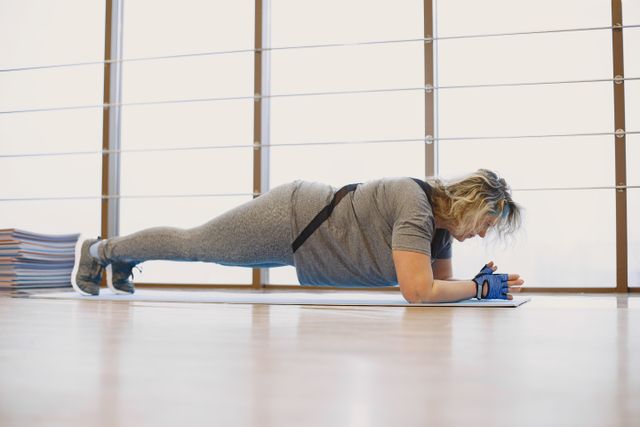
The Specific Benefits – What Changes When You Start Lifting
Your Bones Get Stronger
When you place load on the skeleton through squats, deadlifts, lunges, pressing movements, and any exercise that makes the muscles pull on the bones you stimulate the bone-forming cells called osteoblasts. The bones respond to this mechanical stress by laying down new bone tissue. Over time, regular resistance training measurably increases bone mineral density and slows or even reverses the bone loss associated with menopause.
The most important areas to load are the hip and spine the sites most vulnerable to osteoporotic fractures. Squats, hip thrusts, deadlifts, and loaded carries all apply force through these areas and directly stimulate bone remodelling there.
Your Metabolism Speeds Up
Muscle is metabolically active tissue. Every kilogram of muscle you carry burns roughly three times as many calories at rest as the equivalent mass of fat. When you build or preserve muscle through strength training, you raise your resting metabolic rate the number of calories your body burns just to keep itself alive. This is the most sustainable and physiologically sound way to manage the weight changes associated with menopause. It works with your body rather than against it.
Your Risk of Falling Drops Significantly
Falls are the leading cause of injury-related death in women over 65. Strength training reduces fall risk through multiple mechanisms: stronger leg muscles support better balance and faster reactive responses, improved hip and ankle stability catches stumbles before they become falls, and better overall body awareness reduces the likelihood of misjudging a step or a surface.
The research is consistent on this women who strength train regularly have significantly lower fall rates and, when they do fall, are less likely to sustain serious fractures because their bones are stronger and their muscle mass provides a degree of protection.
Your Heart Health Improves
Strength training lowers blood pressure, improves cholesterol profiles, reduces inflammation, and improves the body’s ability to regulate blood sugar. All of these are particularly relevant after menopause when cardiovascular risk rises. The combination of strength training and moderate cardiovascular exercise provides the most comprehensive cardiovascular protection available through lifestyle.
Your Mood and Energy Improve
Exercise increases the production of endorphins, serotonin, dopamine, and brain-derived neurotrophic factor, a protein that supports brain cell growth and connectivity. For menopausal women dealing with mood changes, anxiety, and brain fog, these effects are not trivial. Many women report that the mental health benefits of starting a strength training programme are among the most significant changes they notice, often within just a few weeks.
You Sleep Better
Sleep disturbances are one of the most disruptive symptoms of menopause. Regular exercise and strength training specifically has been shown to improve sleep quality, reduce the time it takes to fall asleep, and reduce the frequency of night waking. This is partly through the metabolic and temperature regulation effects of exercise and partly through the reduction in anxiety and stress that regular training provides.
You Build Physical Confidence
This is harder to quantify but no less real. Women who start strength training regularly report feeling more capable, more resilient, and more in control of their bodies at a time when menopause can feel like the opposite. Being able to carry the shopping, lift the grandchildren, climb the stairs without getting breathless, or simply feel strong in your own body, these are not small things. They are the foundations of a good life.
What a Good Programme Looks Like
You do not need to spend hours in the gym or lift enormous weights. The research on older adult and menopausal strength training consistently shows that two to three sessions per week of progressive resistance training is enough to produce meaningful results. Here is what a sensible starting framework looks like:
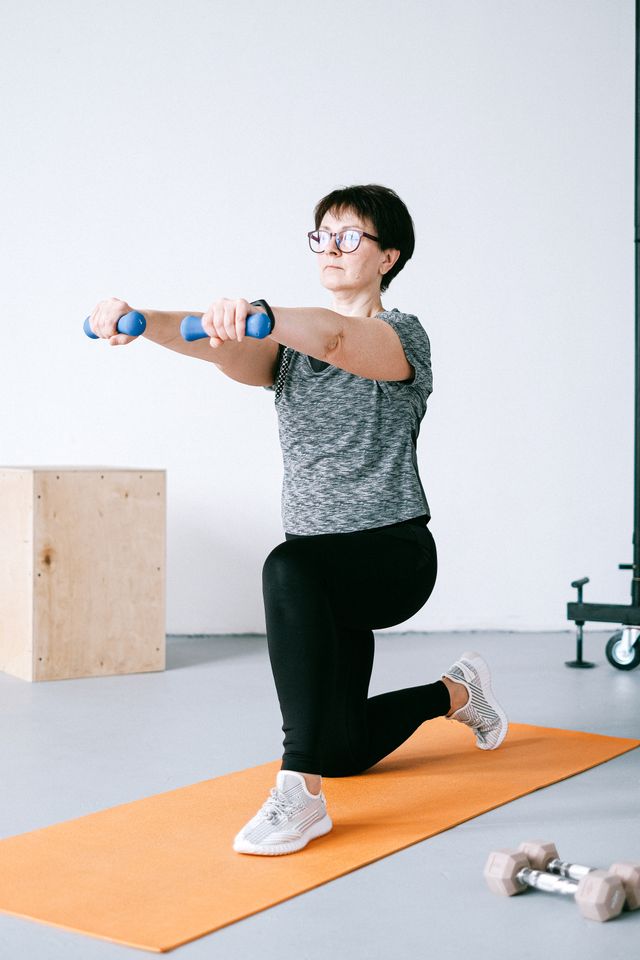
The Most Important Exercises for Menopausal Women
These are the movements that provide the highest return for bone density, muscle mass, and functional strength:
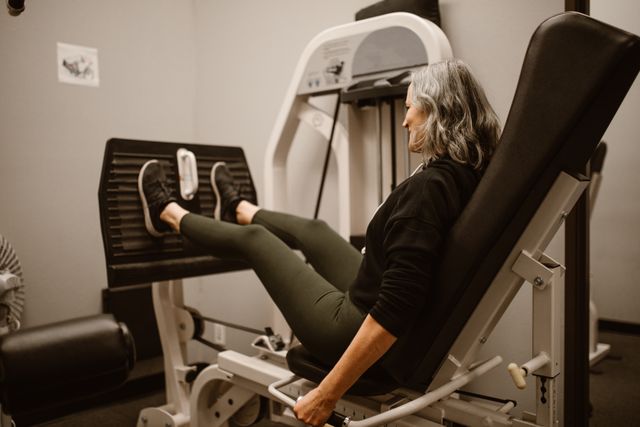
- Squat variations – goblet squat, barbell back squat, leg press. Loads the hip and spine, builds quads and glutes.
- Hip hinge variations – deadlift, Romanian deadlift, hip thrust. Directly loads the hip bones, builds the posterior chain.
- Pressing movements – chest press, shoulder press, push-up. Builds upper body strength and loads the wrists and forearms.
- Pulling movements – rows, lat pull-down, band pull-apart. Builds upper back strength, improves posture, counteracts forward rounding.
- Single leg work- lunges, split squats, step-ups. Builds the single-leg stability that prevents falls and supports walking.
- Carries – walking with weight in your hands. One of the best functional exercises for grip strength, posture, and core stability.
How It Protects You in Old Age
Everything discussed so far compounds. The woman who starts strength training at 50 and maintains it consistently is building a fundamentally different future for herself than the woman who does not. This is not about vanity or performance. It is about the ability to live independently, move freely, and remain physically capable for as long as possible.
| Without strength training Progressive bone density loss leading to osteoporosis. Increasing muscle loss and slowing metabolism. Rising fall risk and fracture risk. Increasing difficulty with everyday physical tasks. Greater dependence on others for daily activities. Higher cardiovascular and metabolic disease risk | With consistent strength training Maintained or improved bone density. Preserved muscle mass and a healthier metabolic rate. Significantly reduced fall and fracture risk. Maintained ability to carry, lift, climb, and move freely. Physical independence maintained well into later life. Reduced cardiovascular, metabolic, and cognitive disease risk |
Research from the University of Sydney found that women who engaged in resistance training twice a week for a year showed measurable improvements in cognitive function alongside the physical benefits. The brain responds to the same mechanical and hormonal signals as the rest of the body. Strength training is not just for the muscles and bones. It is for the whole person.
The strongest predictor of healthy ageing is not genetics, not luck, and not wealth. It is consistent physical activity and strength training sits at the heart of that.
The goal is not to look a certain way. The goal is to be able to get up off the floor without help at 80. To carry your own shopping at 85. To pick up your grandchildren at 70. To climb the stairs without holding the rail at 75. To remain the author of your own physical life for as long as possible. Strength training, started now and maintained consistently, makes all of that significantly more likely.
Where to Start
If you have never lifted weights before or if it has been a long time the most important thing is to start simply and build gradually. You do not need to do everything at once.
- Start with two sessions per week and build to three over time.
- Begin with bodyweight or very light weights and focus entirely on learning the movement patterns correctly before adding load.
- Work with a qualified personal trainer for at least a few sessions if you can, proper technique on the fundamental movements prevents injury and makes everything more effective.
- Track your sessions simply even just noting what you did and how it felt builds the awareness that drives progression.
- Be patient with the process. Bone density changes take months to show up on a scan. Strength changes happen faster but still take weeks. Consistency is everything.
- Fuel the work protein intake is particularly important for muscle building and maintenance. Aim for around 1.6 to 2 grams of protein per kilogram of body weight per day.
The Bottom Line
Menopause is a significant hormonal shift that changes how the body manages bone density, muscle mass, metabolism, cardiovascular health, mood, and sleep. Every single one of those changes responds positively to strength training. The evidence is not ambiguous. The research does not leave much room for debate.
Lifting weights will not make you bulky. It will not hurt your joints if done correctly. It is not just for younger women or for women who have always been sporty. It is for every woman going through menopause who wants to feel strong, capable, and healthy now and for the decades to come.
The best time to start was ten years ago. The second best time is now.
| About the Author Maia Stovold is a qualified Personal Trainer and Sports Massage Therapist based in Newcastle, UK, and a Sport and Exercise Science student. She specialises in beginner strength, endurance training, running coaching, and working with women at every stage of life. She is an Ironman 70.3 finisher and competitive runner. Instagram: @trainwithmaia.pt | Email: maia@soundmindandbody.co.uk | trainwithmaia.pt |
trainwithmaia.pt