Author

When most people think about progress, they think about body weight, but the reality is your weight alone tells you very little about your health, performance, or physique.
That’s where body composition assessment comes in.
What is Body Composition?
Body composition breaks your body down into its key components:
- Fat Mass (FM)
- Fat-Free Mass (FFM)– muscle, bone, organs, and water
Understanding this gives a far more accurate picture of your health and performance than weight alone.
As highlighted in research, body composition assessment is essential not only in clinical settings for health monitoring, but also in sport for evaluating performance and training adaptations.
How Can Body Composition Be Measured?
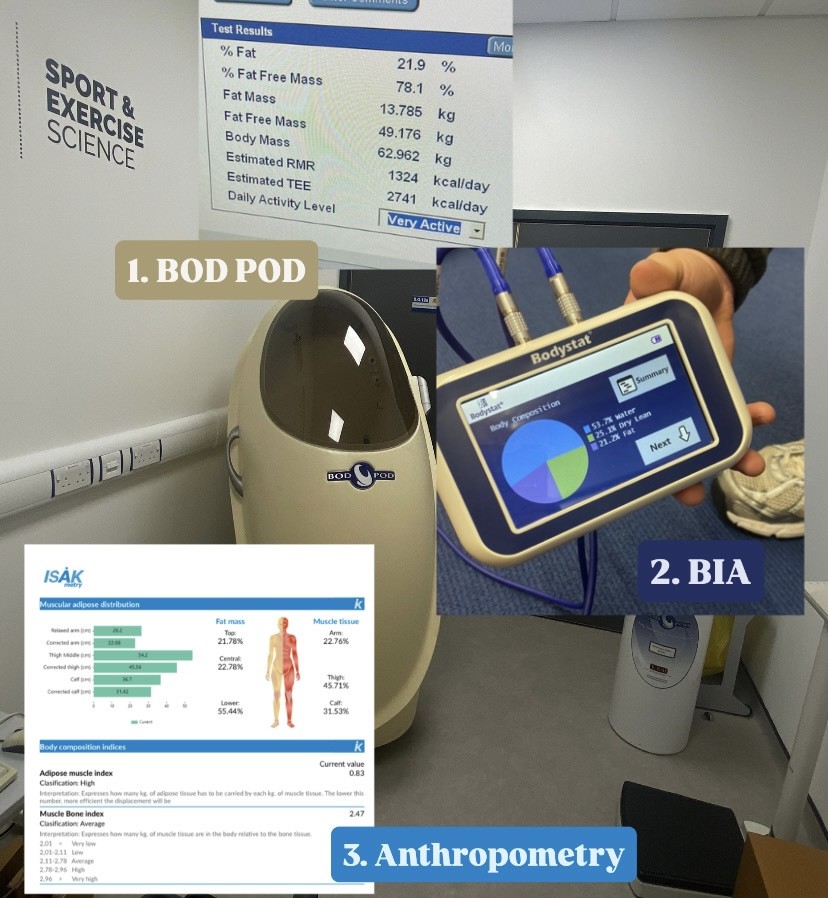
There are several ways to measure body composition, each with pros and cons:
Laboratory Methods
- DXA scans
- Hydrostatic weighing
- MRI / CT
Highly accurate but:
- Expensive
- Less accessible
- Not practical for regular tracking
Field-Based Methods (Most Practical)
- BMI → quick but doesn’t distinguish muscle vs fat
- BIA (Bioelectrical Impedance) → useful but affected by hydration
- Anthropometry (skinfolds & measurements) → practical, repeatable, and detailed
As an ISAK-accredited anthropometrist, I use internationally standardised techniques to assess body composition.
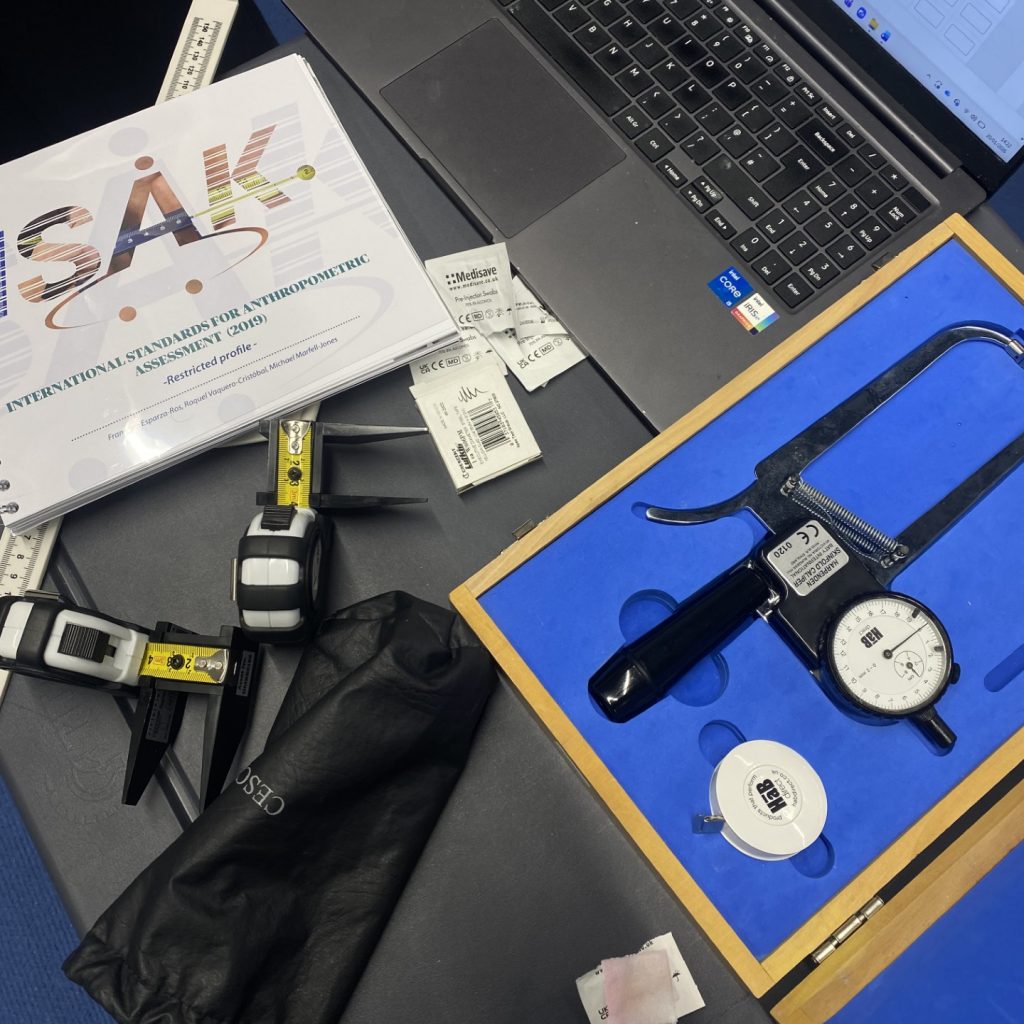
This involves:
- Skinfold measurements
- Girths (circumferences)
- Bone breadths
- Proportions and structure
When done properly, this method is:
- Highly reliable
- Portable and accessible
- Sensitive to real changes over time
And importantly it allows us to track you, not just compare you to generic averages.
What Your Assessment Actually Tells You
This isn’t just a “body fat % test.”
From your report, we can break down:
1. Fat vs Lean Mass
- How much fat you carry
- How much muscle you have
2. Muscle, Bone & Tissue Breakdown
We can estimate:
- Muscle tissue
- Bone mass
- Adipose tissue distribution
Your report shows where fat is stored:
- Central (abdomen)
- Upper body
- Lower body
Higher central fat is linked to increased health risks.
3. Progress Tracking (The Most Important Part)
We don’t just take one measurement.
We track:
- Skinfold sums
- Muscle girths
- Changes over time
Why the Scales Can Be Misleading
You could lose fat and gain muscle but your weight stays the same. That’s progress, but you’d never know from the scales.
Why Accuracy Matters (And Why ISAK Matters)
Skinfold testing is often criticised- but the key factor is who performs it.
Research shows variability in results often comes from:
- Poor technique
- Lack of standardisation
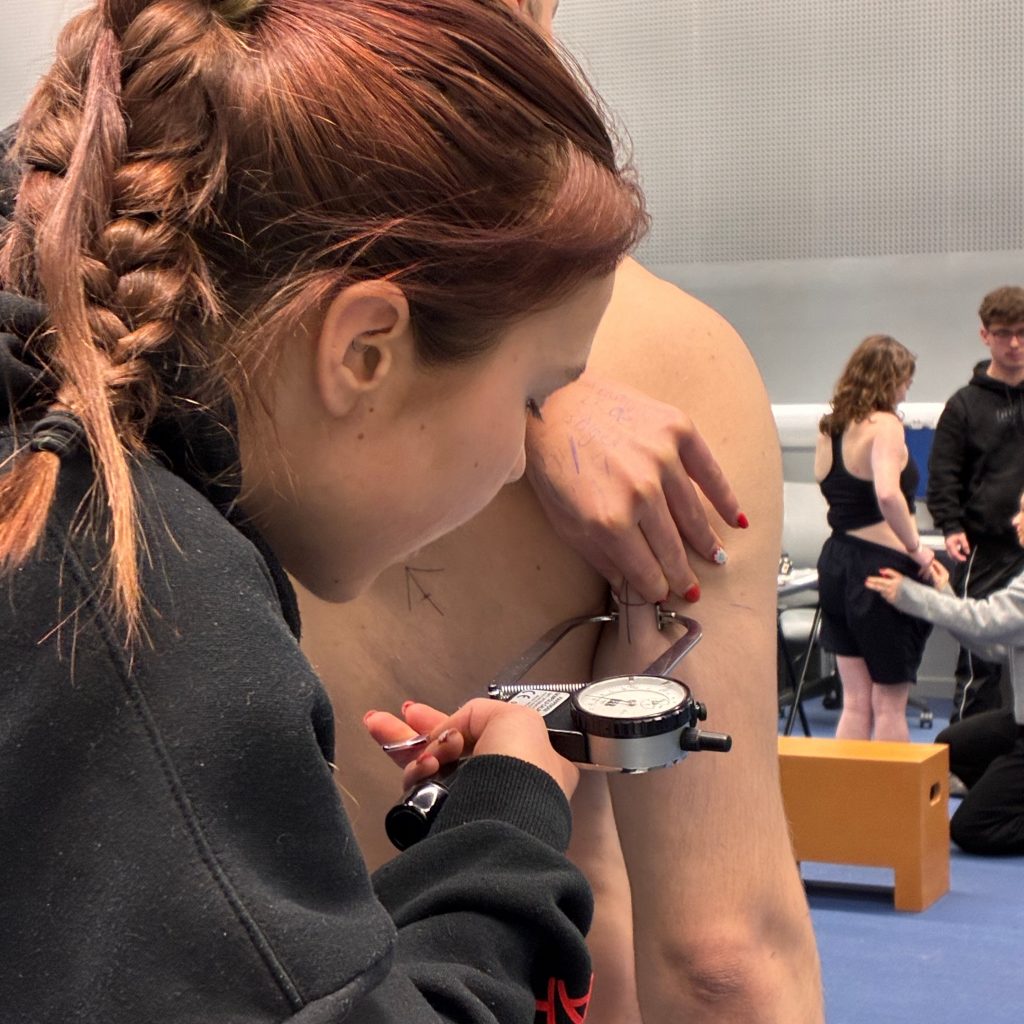
ISAK ensures:
- Standardised measurement protocols
- High reliability
- Consistency between assessments
What to Expect From Your Assessment
Using professional equipment and ISAK protocols, your session includes:
- Full anthropometric assessment
- Detailed breakdown report
- Explanation of your results
Who Is This For?
This is ideal for:
- Anyone wanting to lose fat properly
- Clients looking to build muscle
- Athletes wanting performance insights
- People focused on long-term health
- Anyone tired of relying on the scales
Ready to Get Started?
If you want a deeper understanding of your body, and a smarter way to train, book a 30 minute body composition assessment here at Sound Mind & Body!